
4513.0 - Criminal Courts, Australia, 2011-12  Quality Declaration
Quality Declaration ARCHIVED ISSUE Released at 11:30 AM (CANBERRA TIME) 14/02/2013
Page tools:
 Print Page Print Page
 Print All Print All
| ||||
SENTENCE OUTCOMES Sentence refers to the principal sentence a proven guilty defendant receives (refer to Explanatory Notes paragraphs 45-48 for further information). Differences in sentencing result from the offence with which the defendant was proven guilty, as well as a range of aggravating and mitigating factors taken into account by the court, such as prior convictions, level of violence, whether the offender was provoked, and demonstrations of remorse. The range of sentences available also differs across states and territories. Custodial orders The majority (88% or 10,733) of defendants proven guilty in 2011-12 received a custodial order. This proportion has been increasing from 2006-07 when it was 82%. For defendants proven guilty, 65% were sentenced to custody in a correctional institution; 5% to custody in the community; and 19% were granted fully suspended sentences. Defendants proven guilty of homicide were most likely to receive a sentence of custody in a correctional institution (89%), followed by robbery and extortion (75%) and sexual assault and acts intended to cause injury (both 67%). 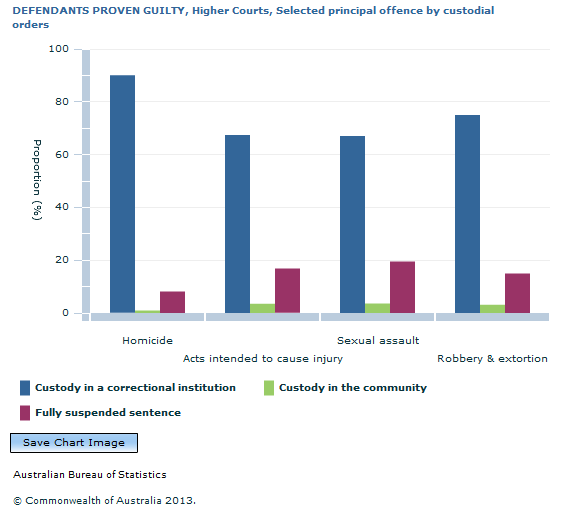 Source(s): Criminal Courts, Australia A greater proportion of males received a sentence of custody in a correctional institution than females (67% compared with 50%). A larger proportion of females were given fully suspended sentences than males (25% and 18% respectively). The proportion of defendants receiving a custodial order varied across states and territories, ranging from 83% in Queensland to 96% in the Northern Territory. 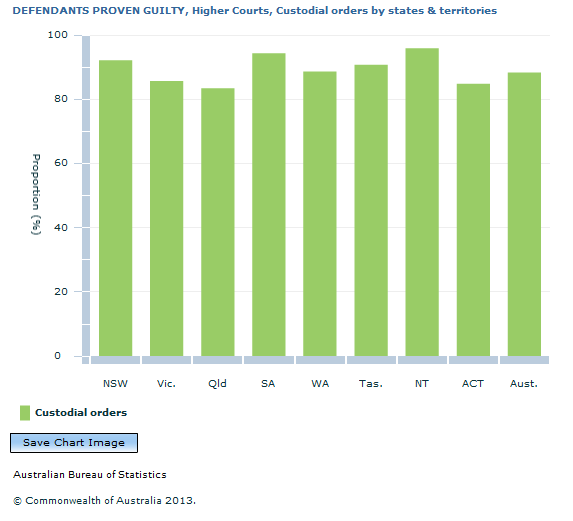 Source(s): Criminal Courts, Australia Non-custodial orders For defendants proven guilty in the Higher Courts 12% (1,425) were sentenced to non-custodial orders (community supervision or work orders, monetary orders and other non-custodial orders), a slightly lower proportion than in 2010-11. The largest proportion of defendants sentenced to community supervision or work order were those proven guilty of public order offences and abduction, harassment and other offences against the person (both 21%). 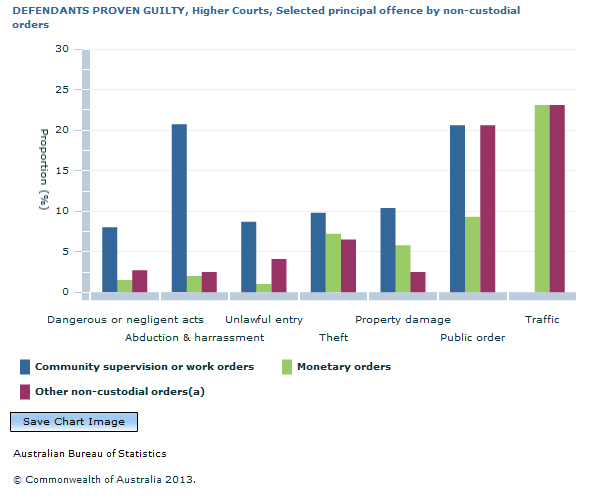 Footnote(s): (a) Includes good behaviour bonds, licence disqualification/suspensions/amendments, forfeiture of property and nominal penalties. Source(s): Criminal Courts, Australia The proportion of females receiving community supervision or work orders (12%) was double the proportion of males (6%). A larger proportion of defendants under 20 years of age received a non-custodial order (21% of males and 38% of females), compared with other age groups.
|
||||